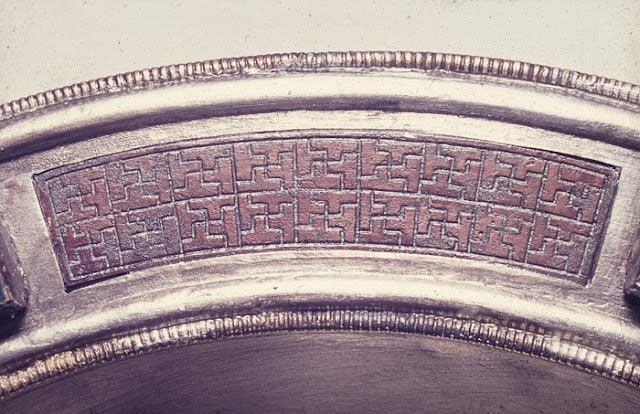
The Ardagh Chalice Ardagh, Co Limerick #Ireland Created during the 8th century, it bears a large amount of intricate and detailed decoration on its various elements. In particular, the two curving panels on the underside of the foot-ring. Each panel bears 72 incised Tau shapes, arranged in 18 groups of four. Each group of four produces a swastika shape at their intersection. Thus, there are 36 swa
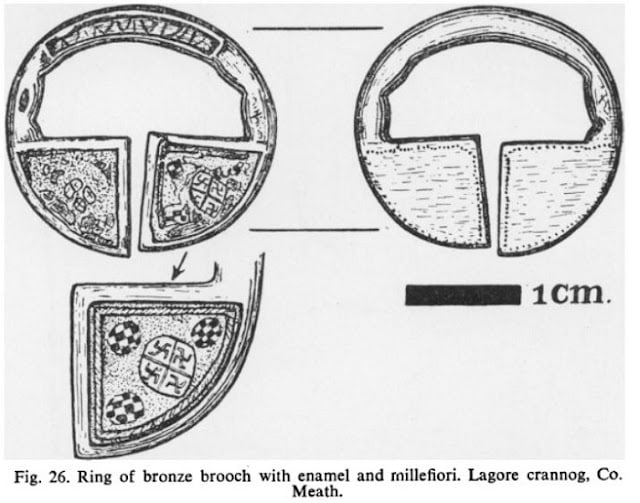
A penannular brooch from Lagore, Co. Meath #Ireland, dating to the 6th or 7th century. The published description indicates that the right-hand terminal is decorated with three chequerboard plaques of millefiori set in a red enamel background. The decorative elements are completed by the addition of a fourth blue and white millefiori plaque, this time bearing four swastikas. The two on the left tur
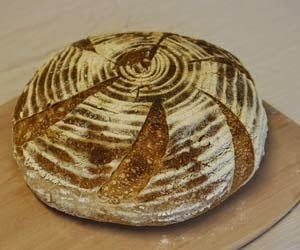
A common solar symbol was the 6-prong rosette which is found to this day on Irish Maslin bread (shown above). Some Maslin loaves are decorated with an oak leaf on top. Maslin bread is the oldest known bread eaten by the Celts. It was the bread of common folks, containing a blend of wheat and rye flours. #Ireland #Celtic
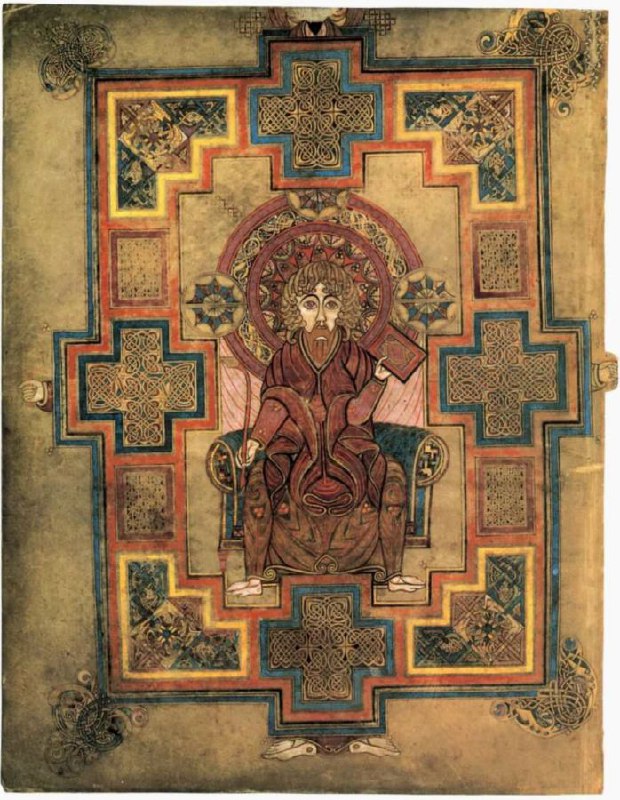
John the Baptist with Gammadion / Swastika-Su Asti, the New Testament “The Book of Kells” (Irish: Leabhar Cheanannais) (Dublin, Trinity College Library, MS AI (58), also known as “The Book of Columba”, 800 AD. #Ireland
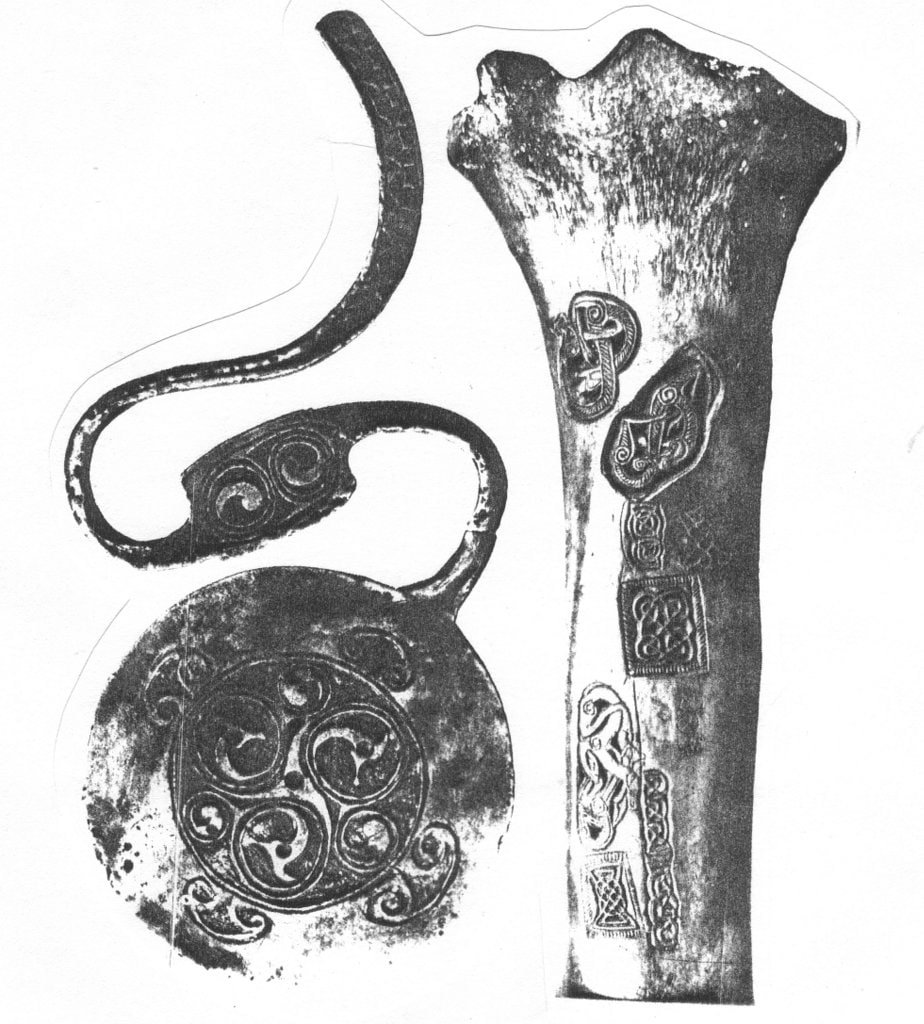
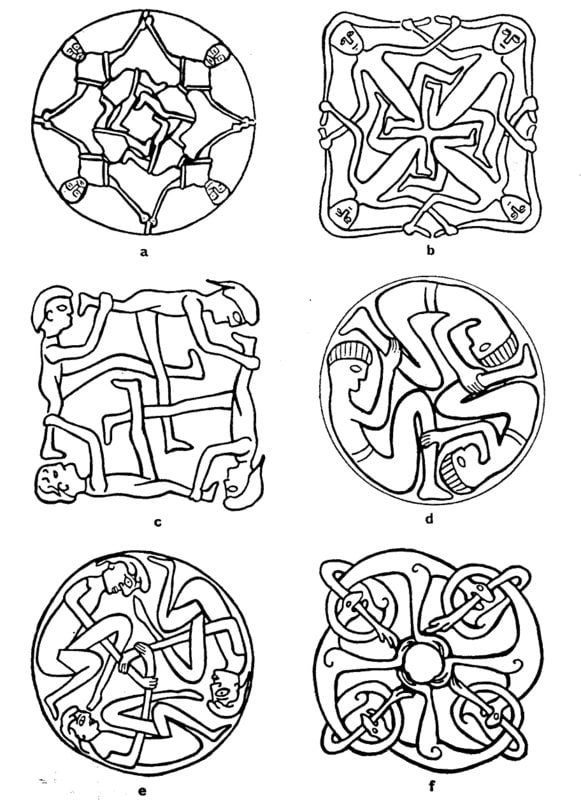
Cyclic #Celtic figures pointing to unity a. Bronze decoration from Luristan; b. Old Kilcullen Cross; c. Kells, Market cross; d. Gilt bronze disk, Togherstown (NMD); e, Book of Kells; f. Broze plaquette in Trondheim Museum. HENRY, Francoise (1967). Irish Art. During the Viking Invasions (800 - 1020 AD). Methuen & Co., Ltd., London #Ireland