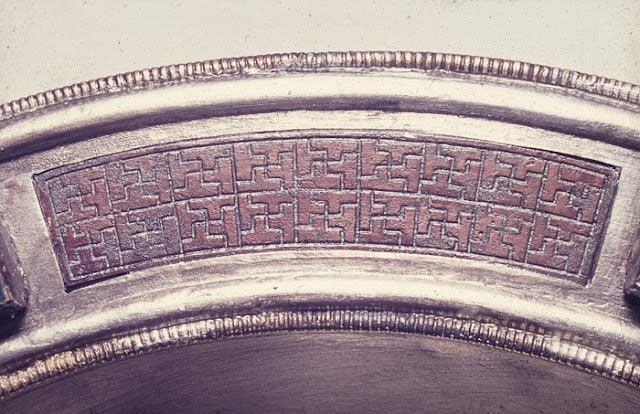
The Ardagh Chalice Ardagh, Co Limerick #Ireland Created during the 8th century, it bears a large amount of intricate and detailed decoration on its various elements. In particular, the two curving panels on the underside of the foot-ring. Each panel bears 72 incised Tau shapes, arranged in 18 groups of four. Each group of four produces a swastika shape at their intersection. Thus, there are 36 swa
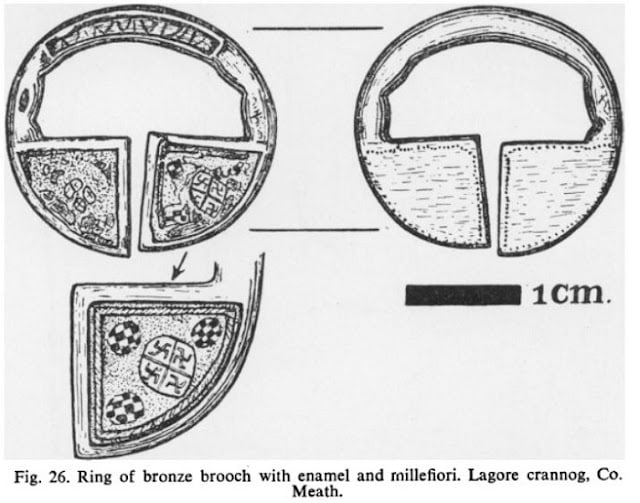
A penannular brooch from Lagore, Co. Meath #Ireland, dating to the 6th or 7th century. The published description indicates that the right-hand terminal is decorated with three chequerboard plaques of millefiori set in a red enamel background. The decorative elements are completed by the addition of a fourth blue and white millefiori plaque, this time bearing four swastikas. The two on the left tur
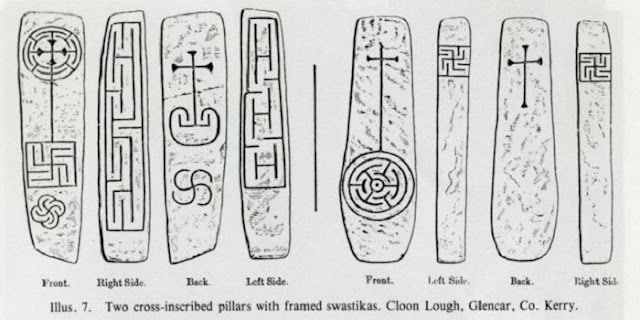
At Cloon West in Co Kerry Ireland there are two pillar stones standing near each other that, between them bear five swastikas. The first of these has two swastikas on one side and one on the other. All three swastikas, though differing in form, are clearly anticlockwise. One side has a Latin cross with triangular terminals and a pelta above a curving, sinuous swastika. The other side has a similar
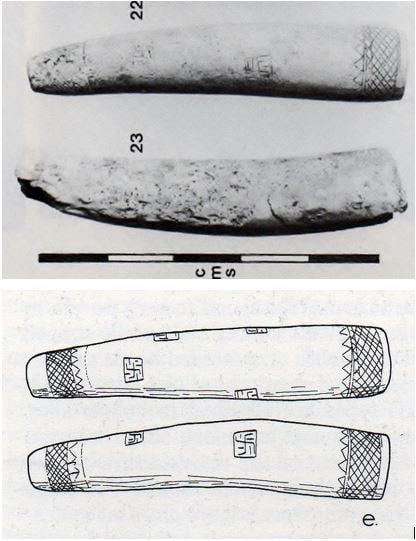
At Cathedral Hill, Co Armagh, Ireland, excavation by Cynthia Gaskell Brown and A.E.T. Harper in 1968 recovered a bone knife handle from a dump of material, pushed into a ditch. Judging by the associated material, it would appear to date to the broad period from the 5th to 10th centuries. It is also decorated with four swastikas, each one composed of simple, incised lines, enhanced by an incised ou
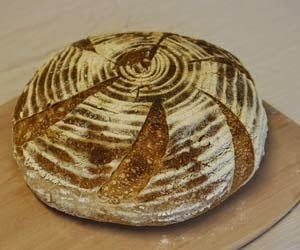
A common solar symbol was the 6-prong rosette which is found to this day on Irish Maslin bread (shown above). Some Maslin loaves are decorated with an oak leaf on top. Maslin bread is the oldest known bread eaten by the Celts. It was the bread of common folks, containing a blend of wheat and rye flours. #Ireland #Celtic
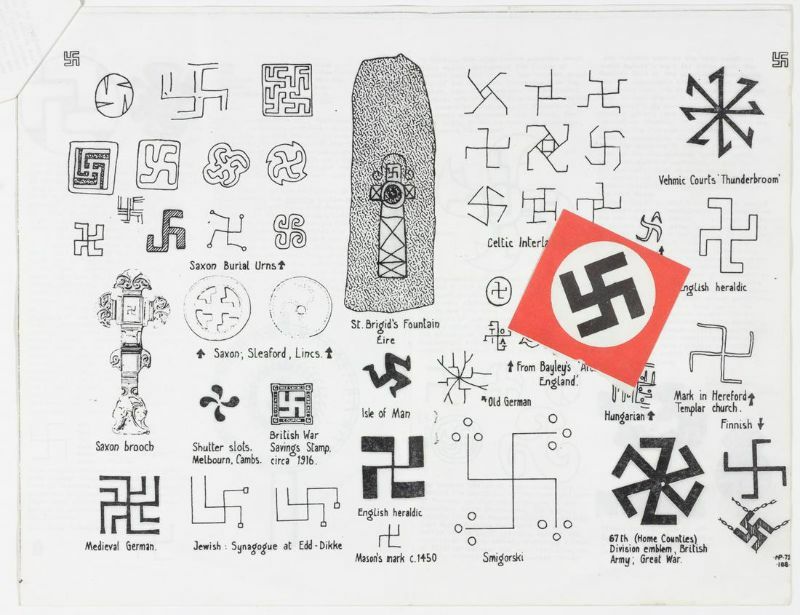
Charles Manson's photocopy of the complete contents of printed book 'The Swastika' by Nigel Pennick, 8pp. 4to., published in England in 1980. Pennick (born 1946) also published on occultism, magic, natural magic, divination, subterranea, rural folk customs, traditional performance and Celtic art. The text explores the history of the ancient symbol which far predated the Nazis' use, and the symbol
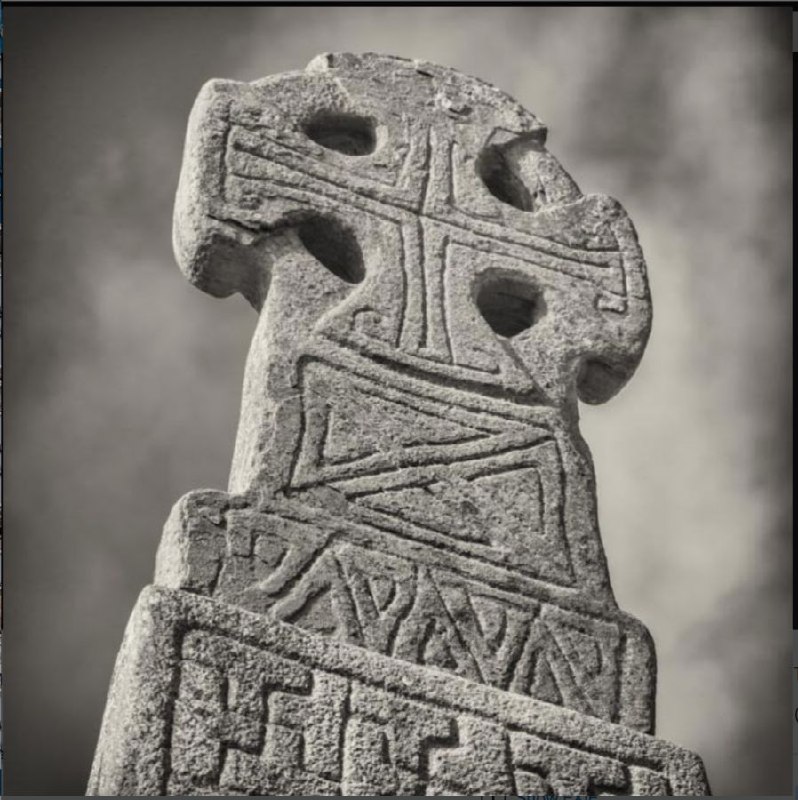
Gammadion on the #Celtic Cross of the 11th century near Carew Castle, built by the Norman Gerald of Windsor around 1100, Southern Pembrokeshire, West #Wales.
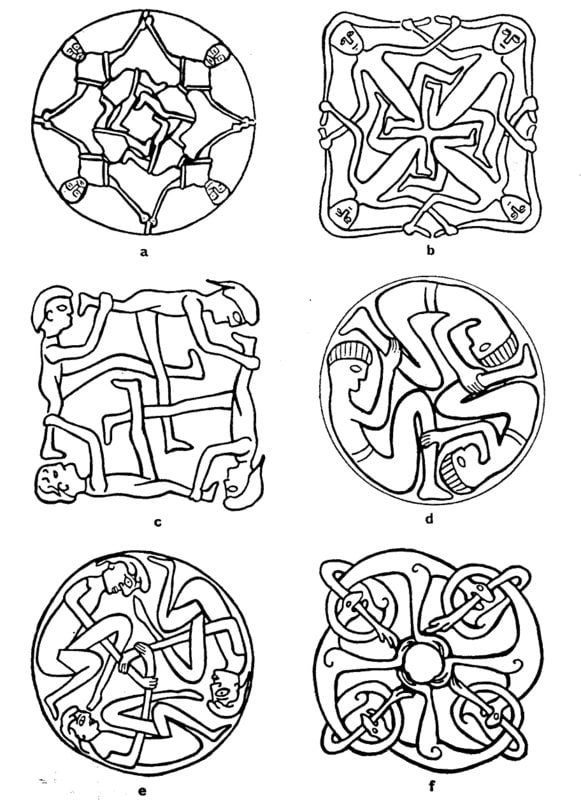
Cyclic #Celtic figures pointing to unity a. Bronze decoration from Luristan; b. Old Kilcullen Cross; c. Kells, Market cross; d. Gilt bronze disk, Togherstown (NMD); e, Book of Kells; f. Broze plaquette in Trondheim Museum. HENRY, Francoise (1967). Irish Art. During the Viking Invasions (800 - 1020 AD). Methuen & Co., Ltd., London #Ireland
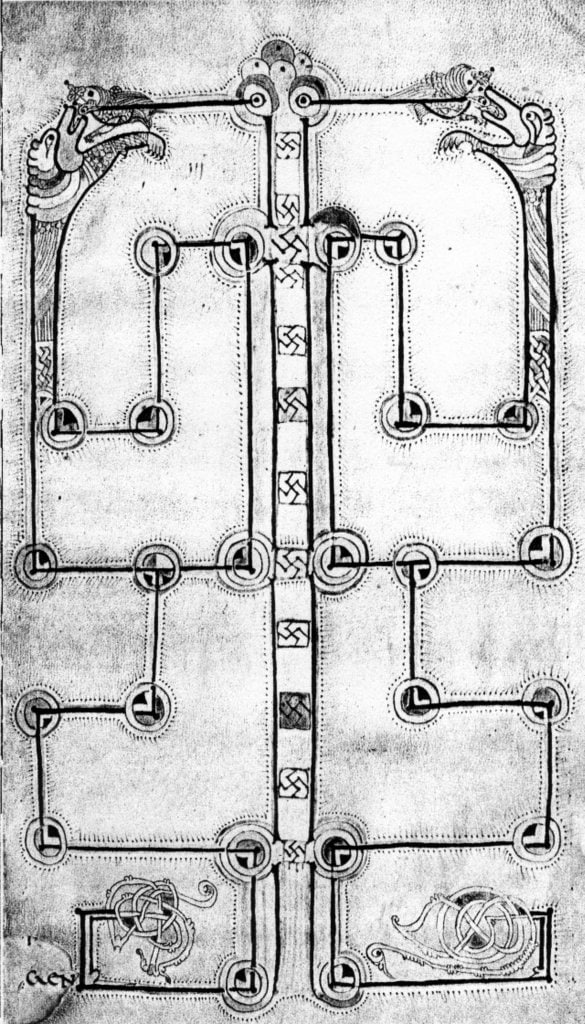
Two dragons and the world tree Miniature from the 'Literae paulinae', Northumberland, eigth century. COOK, Roger (1975). De levensboom; symbool van het middelpunt (vert. E.A.M. Scheltema-Vriesendorp). Thames and Hudson Ltd., London (1974). Unieboek/De Haan, Bussum. #Celtic